Canadian Government Considering Reparations for Mennonites

Mennonites accuse the Government of Canada of bargaining in bad faith when photo provided during negotiations showed Kielke and not Vereniki as indicated in the text of the agreement

After years of inaction the Government of Canada is considering making reparations to Mennonites for ,close to a century of failure to live up to its obligations under the provinces of the Priviligium of 1873. 

The Priviligium passed by Order In Council was designed to entice Mennonites from South Russia (now Ukraine) to immigrate to Canada. It resulted in some 7000 Mennonites moving to Canada between 1875 and 1885. 

The Priviligium provided Mennonites with 15 guarantees the most important from the Mennonite perspective being freedom of religion, exemption from military service, the right to run their own schools using the German language and free land. 

Although the government has admitted to violating its agreement with the Mennonites, the government has essentially told Mennonites to go to the ‘back of the line’ as it has more important groups to deal with. It would appear that the government is confident that because Mennonites are pacifists it has nothing to fear in terms of any militancy by the Mennonites. 

Preliminary discussions have focused on how to ‘restore’ the position of those Mennonites who immigrated to Mexico and points beyond in 1927 and 1948 wholly based on the the government’s failure to honour its 1873 agreement with the Mennonites. 

To this point the government has floated the idea of providing an annual free dinner to all Mennonites in Canada and Mexico. The dinner would include vereniki and foarma worscht complete with schmaunt fat. As well, men of voting age would each receive a pair of schlaubbekjse every second year and women would receive en duak every 3rd year. 

To this point Mennonites have rejected the government’s offer and negotiations are ongoing. The Mennonites have suggested to the government that as a sign of good faith and respect they should learn the difference between Kielke and Vereniki.

One China Policy not an issue for Halbstadt man

red-truck-1633738__340

Halbstadt, Mb

Local Halbstadt farmer Trock Heinrichs says he is not concerned about America’s one China policy.

Heinrichs indicated that as far as he is concerned things that happen on Jantsied, like the recent gay pride parade in Steinbach, have little effect on people living on Ditsied and China is even further away than Steinbach.

When asked about his first name, Heinrichs who declined to be photographed said because he drives a half ton and has never owned a car  people in the area started calling him Trock and it just kind of stuck.  His actual given name is Corny.

Heinrichs did agree to have his truck photographed.

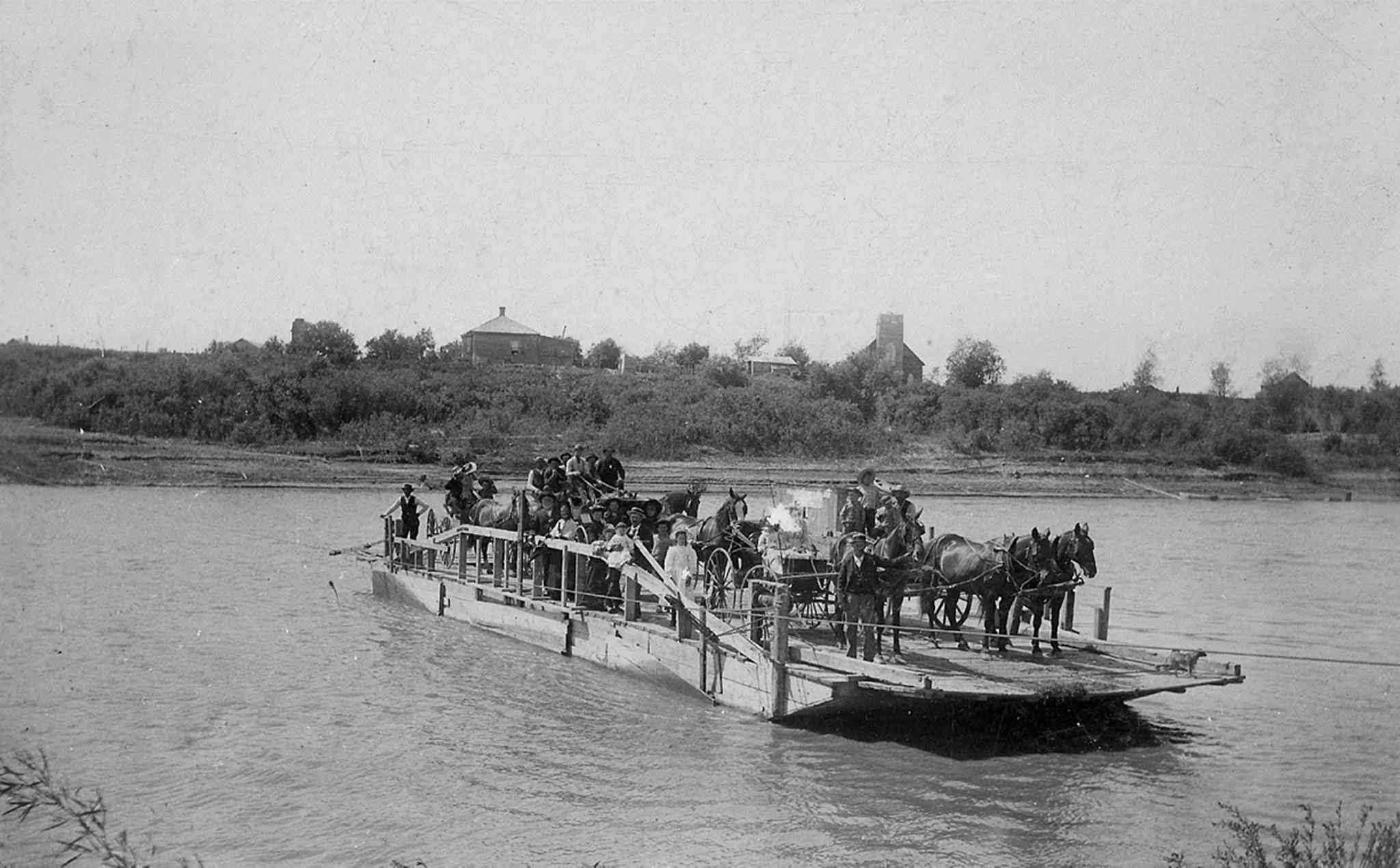
Mennonites finally settle the “Jantsied” question

Altona residents going to visit relatives on jantsied

ferry_edit

Photo Credit: Winnipeg Free Press

Schanzenfeld – After years of raging debate the Jantsied question has finally been settled.

For over a century Mennonites on the west and east side of the Red River have disputed which side was ditsied and which was jantsied.  Both sides claimed that settlements on the other side of the Red River were on jantsied.

Sensing that this ongoing dispute was causing disruption in the Mennonite community church elders from both ditsied and jantsied met this week in Schanzenfeld to resolve the issue once and for all under the guidance of John Smith an independent arbitrator.

Henry Blatz, speaking on behalf of Mennonites east of the Red River, spoke eloquently about the absurdity of the argument pointing out that if you were in Steinbach then clearly towns and cities like Altona and Winkler were on jantsied.

Peter Dyck speaking on behalf of the Mennonites on the west side of the Red River made the argument  that seeing as Altona and Winkler were clearly on ditsied then Steinbach was obviously on jantsied.

The arbitrator summed up the discussion by observing that this was clearly a matter of perspective and ruled that the issue would be settled by a coin flip.  Smith called on Peter Dyck to make the call.  Dyck chose ‘heads” and won the flip.  As the winner Dyck declared that from this day forward  the settlements west of the Red  would be known as ditsied and those on the  east of the Red River would be known as jantsied.

In an exclusive post meeting interview with Spottschreft, Blatz indicated that as far as he was concerned the ruling was open to challenge as the issue was much too important to be settled by a flip of a coin and by a non-Mennonite arbitrator, a process that he characterized as un-Mennonite.


For those having difficulty with the Plautdietsch (low German) words in this post please consult the the “Translation” Page